

Tree pruning conifers through the dormant season will minimize sap and resin flow, however they can be pruned at any time. Tree pruning the trees which have showy flowers also needs to be achieved while dormant so that you can see the structure, maximize wound closure, reduce disease and also to eliminate any excessive flow of sap.
Flowering https://canvas.instructure.com/eportfolios/2466586/Home/Ground_Maintenance_Company__AN_IDEAL_Guide_for_the_Gardening need dormant pruning for exactly the same reasons above but some could also need pruning at other times. Timber that blossom in planting season, the dogwood and red-bud for example, ought to be pruned immediately after they flower. Many flowering trees can be susceptible to fire blight, a bacterial disease, that may spread by pruning. These trees, such as for example crab apple, pear, varieties of hawthorn, mountain ash, pyracantha, and flowering quince must be pruned during the dormant season. The ones that flower during summer or fall also needs to be pruned during dormancy. Dead branches, however, can be removed at any time.
Fruit trees won't develop to the correct form or shape without any pruning or training. Properly pruned and trained fruit trees will yield a higher quality fruit earlier and their live span will be longer. The objective to pruning and training would be to develop a strong tree framework which will be able to support a large crop of fruit. If fruit trees aren't trained in the right way the angle of the branches will be much too upright and will cause breakage with a heavy crop. This will result in a reduction in the productivity of the tree and shorten its life. Another facet of annual pruning and training is to get rid of all diseased, broken, and dead limbs.
Proper tree training will open up the tree's canopy and invite penetration of maximum light. The majority of fruit on a deciduous tree is formed the previous year as flower buds. The penetration of light is most important in the development of buds combined with the optimal fruit set, flavor and quality. Even if an adult fruit tree is growing quite well in full sun, a dense canopy will prevent enough sunlight to attain 18 inches in the tree. Opening up the canopy of the tree allows for proper movement of air to permit speed in drying to reduce infection and allow penetration of pesticides. A perfectly shaped fruit tree could be a beautiful asset to a garden or landscaping.
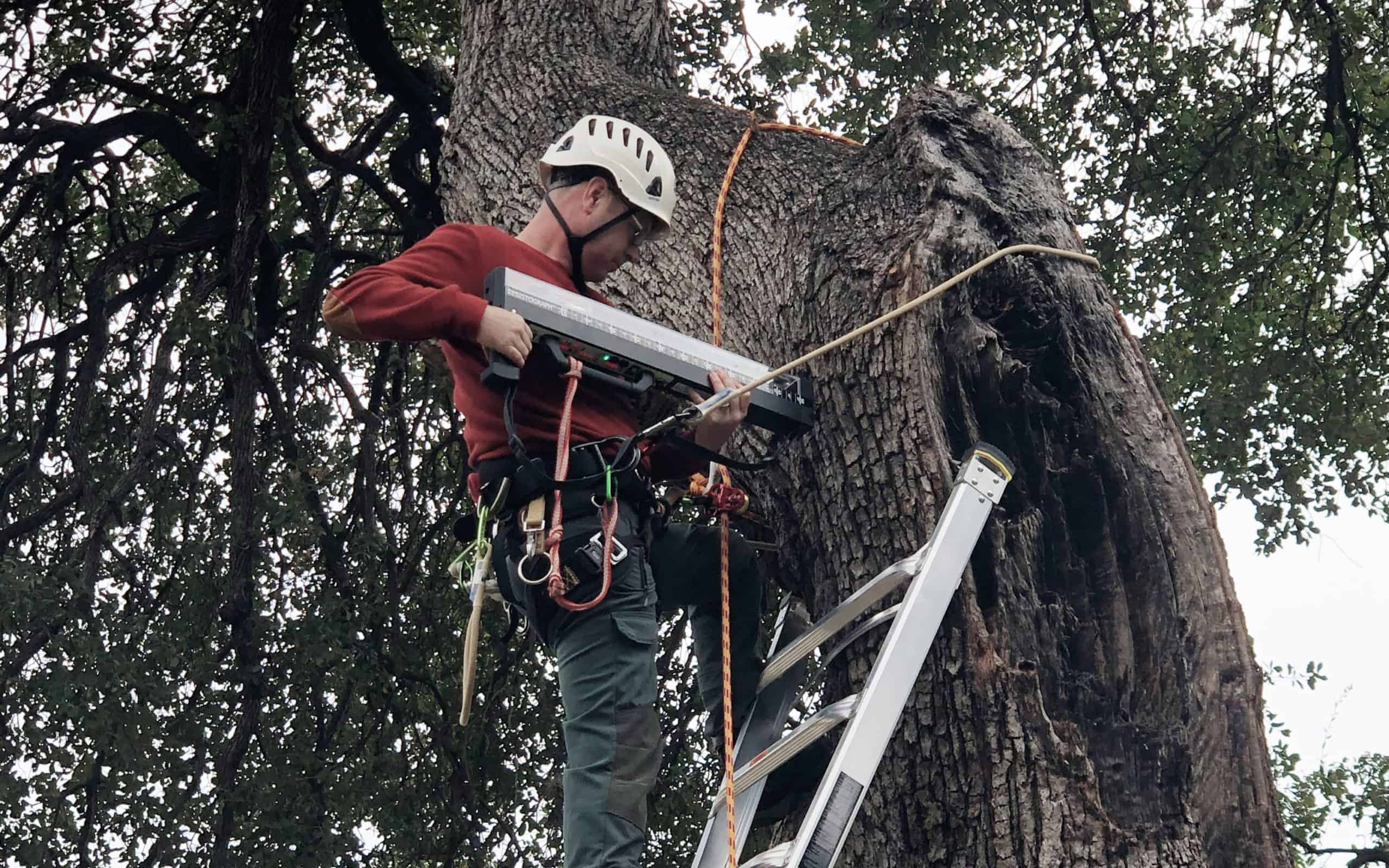
During the past pruning is definitely the technique in forming and structuring fruit trees. Tree training is a more desirable and effective way to enhance the structure and form. Pruning is simply the removal of portions of a tree that correct the structure; training is a newer application where the direction of the growth to a desired form and shape is determined. Training a fruit tree is essential for proper development. It is usually easier to train the direction of the growth than to prune to correct it. Pruning is usually done in the wintertime while training and pruning is performed in summer in addition to pruning in dormancy. The objective of training would be to correct the growth of a tree in addition to to minimize cutting.
https://hines-mccurdy.federatedjournals.com/what-is-tree-removal-1707352752 respond differently to summer pruning and dormant pruning. In the fall the power of the tree is stored in the main and trunk system to aid the very best section. If removal of a large part of the tree is done during dormancy, the tree's energy isn't changed. In the spring, the tree will react by producing many upright, energetic shoots called water sprouts; these will shade the tree and prevent good development. Heavy pruning during dormancy causes exactly the same problem.
Dormant tree pruning has to be done late in the season in order to avoid winter injury. Apple and pecan trees need pruning before peach tree pruning, plum-tree pruning and cherry tree pruning. A practice would be to prune early blooming trees last and the later blooming trees first. It is advisable to prune the older trees first because the younger ones are inclined to winter injury with early pruning. Summer pruning reduces a lot of the tree's energy that will bring about tree growth reduction. Pruning will start as soon as the buds start growing, but usually it begins following the growth of vegetation is several inches long. In most cases summer pruning is to eliminate vigorous and upright growth and only the cuts that may do some thinning. Summer pruning must be completed prior to the end of July as a way to lower any problems of winter injury.